Electrolux Design VP Simon Bradford on product design, tech, and the impact of Silicon Valley - Yanko Design
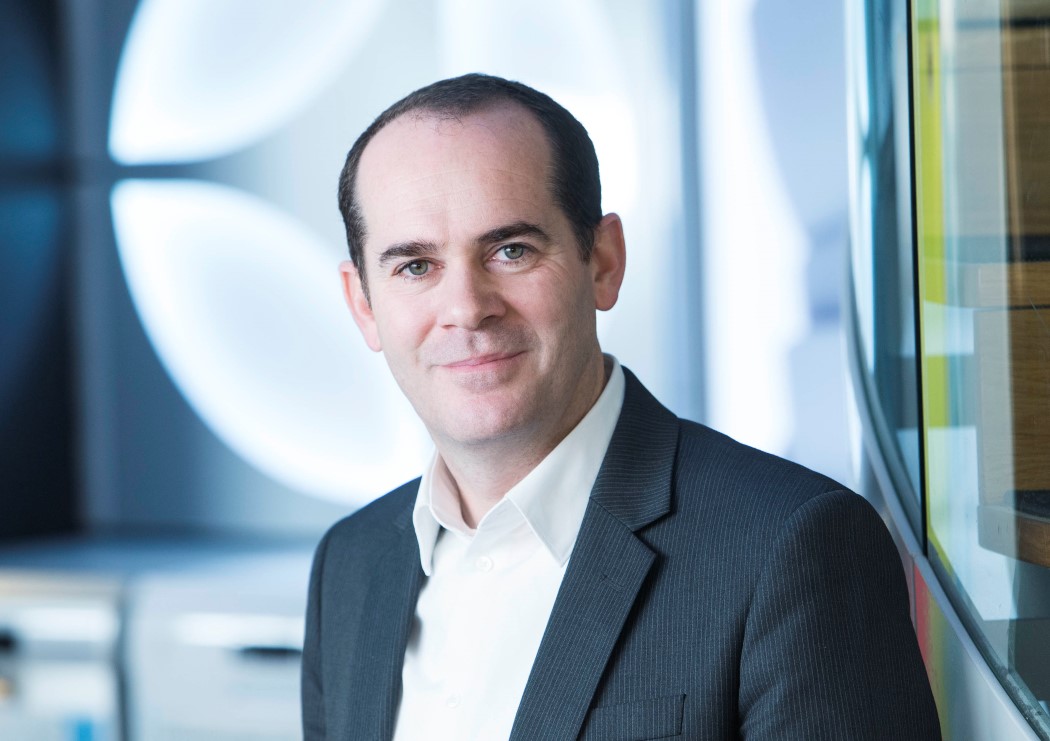
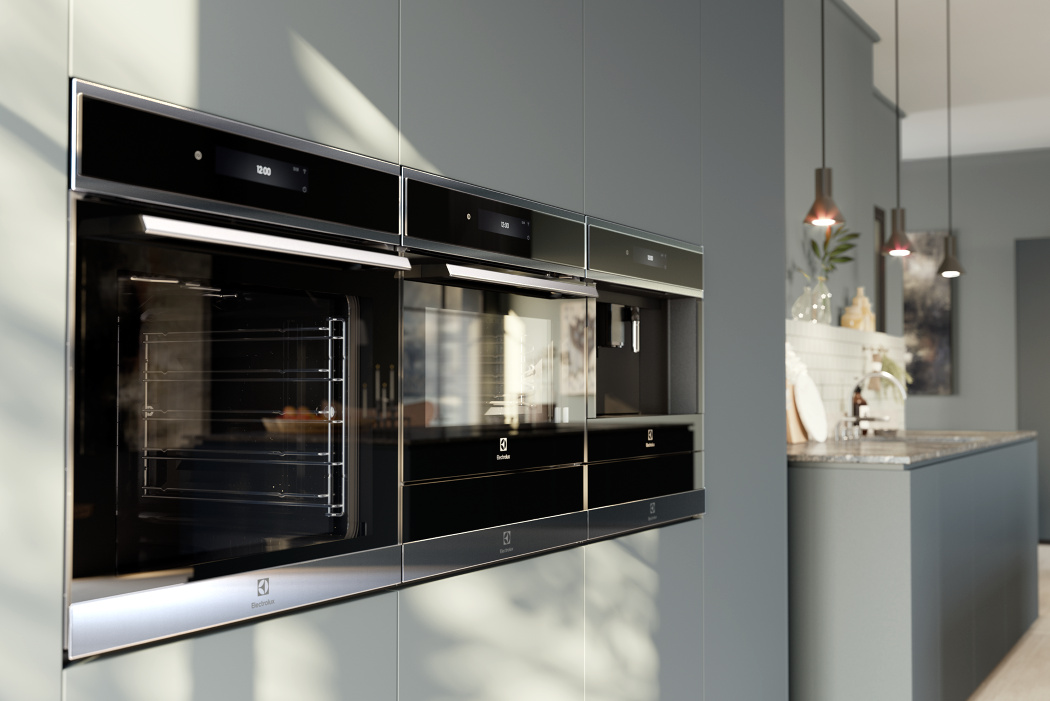
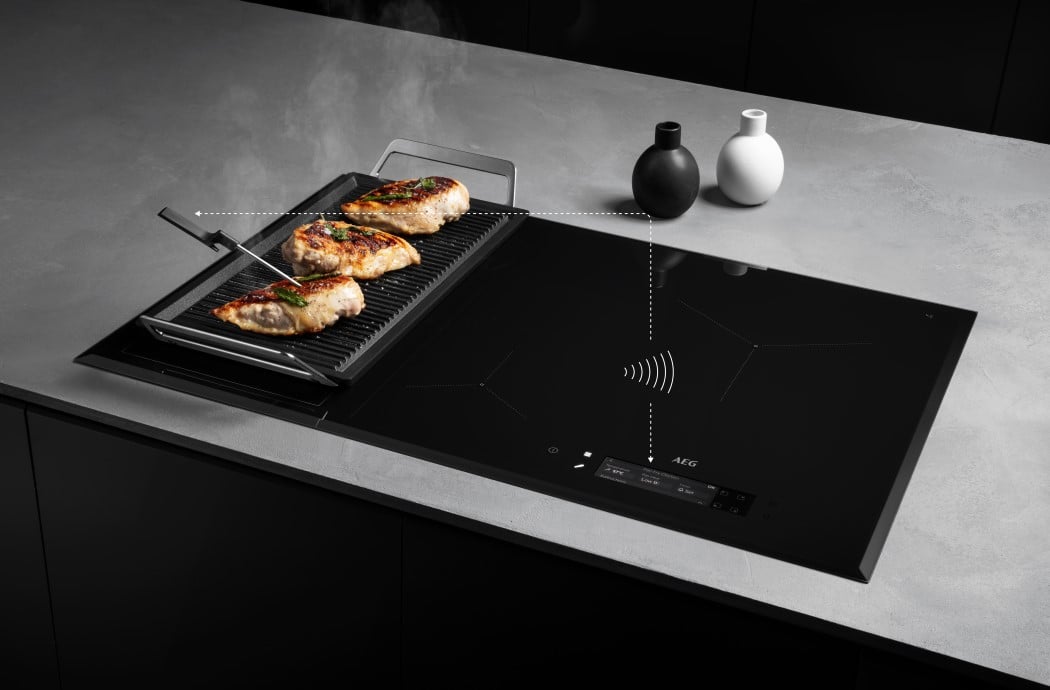
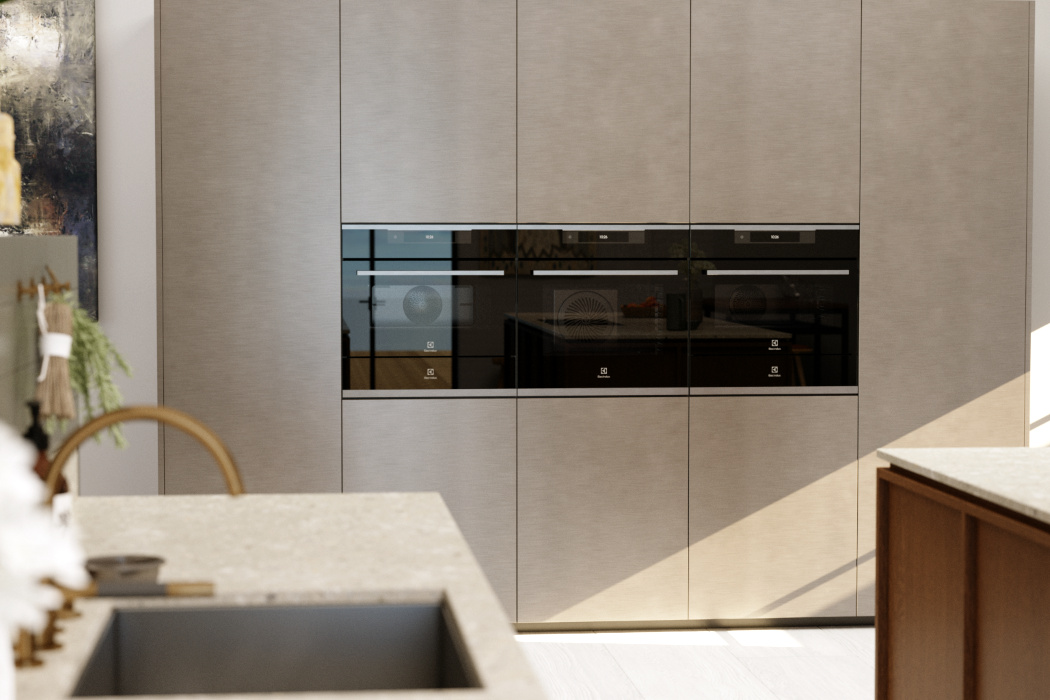
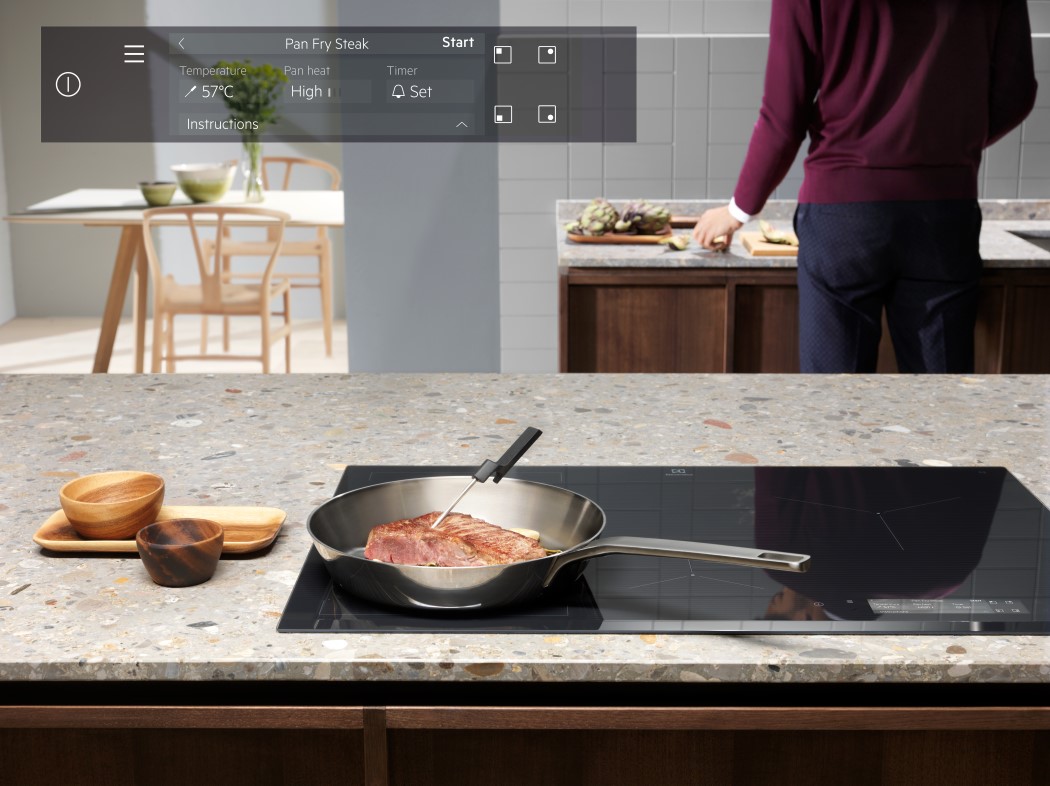
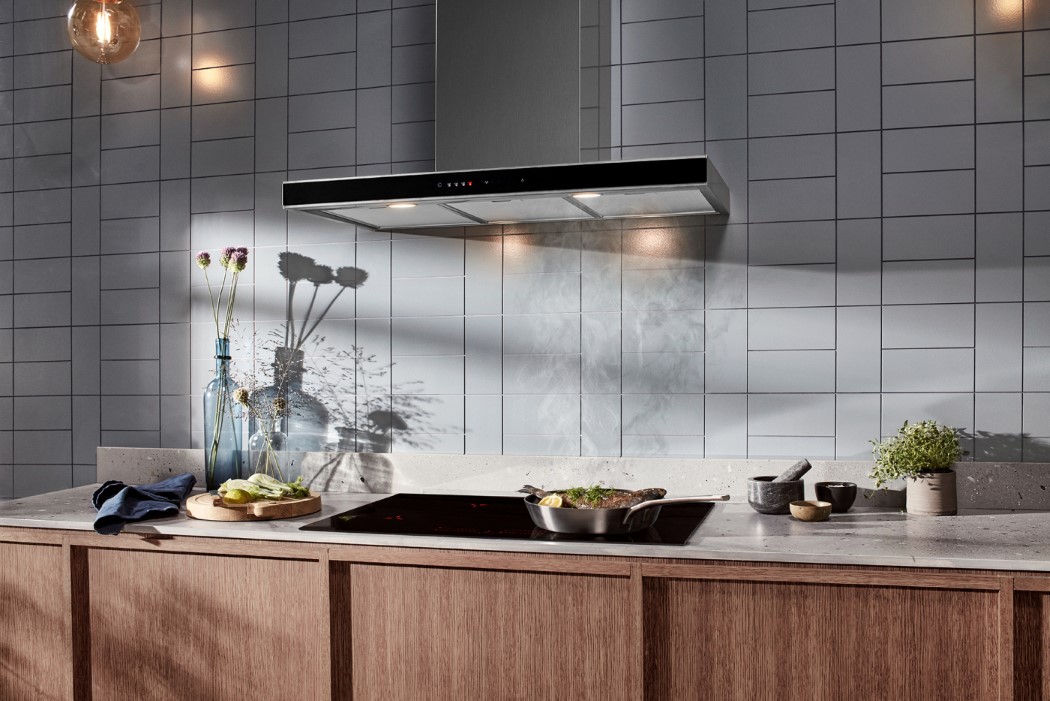
Simon Bradford is sitting in the conference room waiting for us. He's just demoed Electrolux'south Intuit kitchen range, a cutting-border range of kitchen appliances that are more than just instruments, they are enablers. I'k talking ovens with closed-excursion cameras in them and induction hobs that tin tell the chimney when to switch on or off. Bradford'due south spent years developing the products around this technology, creating kitchen tools that tin plough amateurs into experts, and can assistance experts cook things they couldn't before. After the demo, Simon even took united states through the design process he'due south instated at Electrolux, putting the consumer experience at the absolute forefront. We enter the conference room and are greeted by a warm welcome, afterward which nosotros speak to Simon almost a lot of things, ranging from his view on design in the by and the present, his thoughts on Silicon Valley's motto of moving fast and breaking things, and nosotros even asked him about the new Mac Pro 2022 (how could we non!) Simon explained to us how he approached designing his range, what the adjacent big thing was for Electrolux after introducing Artificial Intelligence and intuition to cooking, and the distinction between designing using the the glorious past as a reference, and the exciting future every bit a management.
Yanko Design: Hey Simon! Loved the presentation and especially the Intuit Range. For the people reading this interview, we literally made the well-nigh perfect pancakes on the SensePro induction cooker, and the cooker literally told u.s.a. when it was fourth dimension to pour the concoction. The pancakes were admittedly perfect! So now that our stomachs are full, let's caput into this interview! Hi Simon, tell us a little near yous and your role in Electrolux today.
Simon Bradford: Hey! Lovely having you here! I've been with the Electrolux group for about 10 years. Started my journeying with Philips, and so moved onto Sony, then Nokia, and finally Electrolux here in Stockholm, Sweden. I've honestly liked working with corporate design organizations, considering you really work inside the total spectrum. Y'all go from consumer insights to visiting peoples' homes, all the fashion to the product rolling off the production line to launches similar the this 1! Then, I started here as Caput of design for Floor Care & Small Appliances. Five years ago I started on the major apparatus journey equally head designer there.
The kitchen space is a very emotional category to be involved in and it is continuously changing. It's all about peachy tasting nutrient! People buy appliances considering they like cooking keen tasting meals for family and friends, loved ones, on the weekend and during the week. With the arrival of connectivity, it's an extremely interesting product category to be involved in because it is going to completely modify it; change people'due south behaviors, modify the way we interact with our products, and change the way we eat food. This is what is driving me in my role and has done for the by 10 years.
YD: How did the range come about? What was the starting point?
SB: The inkling is in the discussion "Intuit". It is curt for Intuitive, meaning something which is totally seamless and easy to understand. In our daily lives we are surrounded past negative stereotypes or user pain points. By putting the consumer at the eye of everything nosotros practice, is when we tin get-go turning those negatives into meaningful experiences. Our definition of an outstanding experiences can be summarized by the following three words: Effortless, Enriching and Empowering. By Effortless we mean making things easy, taking abroad all friction points. Enriching means making the experience memorable, by creating moment of magic and tapping into all the human senses, touch on, smell, hearing… And finally Empowering, meaning we adapt to the consumer, offering them solutions to expand their cooking repertoire!
YD: If we're talking nigh enriching, I'd just love to become back to 1 of my favorite design details of the entire range. That swiveling refrigerator tray! As an industrial designer turned writer, that absolutely blew my mind. The intricate blueprint, the way information technology comes slightly frontward so the tray tin rotate a total 360°, it was just a care for to look at! How practice y'all approach such a pattern problem? I'grand assuming y'all went through multiple iterations.
SB: Hahah! I like the question, and I think I tried to convey that in my presentation earlier. We're honestly learning a lot from Silicon Valley, we're learning a lot from companies in the digital globe who work active. It'southward very much this test, learn, iterate blazon of process, but you lot exercise it very quickly, until you lot're really certain that the proposition y'all're bringing into the market place is the correct one. The SpinView (rotating tray) was a great instance of how nosotros iterated time and time once more, loads of paper-thin mockups, simply we've definitely been on this journey of beingness active. Usually, a few years ago, the old fashioned way would exist to build it, difficult-tool it, bring it to market, and consumers tell you "Hey, it's rubbish". Our focus now on Consumer Experience helps us actually pick upwards on feedback and gain insights on what they think, and we've spent a considerable amount of effort and money on developing tools that help us very quickly capture consumer feedback from reviews all over the cyberspace, helping us be as agile equally our American counterparts.
Equally far as the SpinView is concerned, the insight came from observing consumer behaviors rather than just feedback analysis. Do you know that 30% of the food in the fridge gets thrown out. Why? Purely due to lack of visibility. We see a lot of fresh fruit, vegetables, basically rotting away at the back purely due to lack of visibility. Among other features, SpinView was designed to uplift the refrigeration feel, while also ensuring that food doesn't become to waste!

YD: You often mention the importance of human-centric design and the consumer experience. What does that mean to you?
SB: To me it means following a creative process that is centered around the user. Only when we have truly understood the needs of our consumer, tin can we and so design experiences that will improve their daily lives.
YD: Okay, here's a difficult question though. How much exercise you retrieve Pattern Thinking has the potential to influence the workings of a corporate like Electrolux? At the end of the day a visitor is answerable to a board, its investors, and a wide variety of people, so is it easy to highlight the importance of design over reports and statistics?
SB: Blueprint is a negotiation. Information technology's a collaborative process between all entities. Not every visitor is like Apple tree! There have been multiple instances where a blueprint has been besides expensive, or hasn't effectively fulfilled a consumer need, which I recall is an accented failure. And in a corporate surround, there's obviously a commercial reality that everyone has to face up. A product needs to fulfill all expectations, and not necessarily those of just the consumer, right?
YD: That commercial reality is perhaps what is missing from design institutions, don't yous call back? Is there anything you had to unlearn while entering the manufacture?
SB: What I really had to unlearn is that blueprint isn't all nigh cosmetics. When I graduated many years ago, the norm was to plaster the wall with as many sketches equally possible, it was a bit of a dazzler competition. Design is so much more that. Information technology's about feel, which I've talked most. It'south almost entreatment, just it's besides nearly usability, low endeavor, robustness, longevity, and fulfilling a consumer need. The appeal is almost a by-production. If you lot become the insight correct, and you're solving a pain-bespeak, the appeal will come naturally.
YD: Although this reality you mentioned is somewhat in contrast with what the Electrolux Design Lab has been well-nigh, right? Design Lab was always nearly creating outrageously futuristic concepts with focus on technologies that don't exist and are purely conceptual.
SB: You lot're right. With Blueprint Lab, I'd merits that almost all the designs were based on insight, but it depends on how far-fetched the execution is. We often use the terms horizons. Is it a horizon 2,5,ten product? Naturally when you're working for a company or yous're employed, yous keep your horizon relatively close otherwise you disconnect yourself from the business. But with students, we want them to button the boundaries. They aren't constrained all the same, merely it takes a couple of years of working in the manufacture for the horizon to emerge closer and closer, as designers start looking at commercial realities. Information technology's about finding the right residue while you lot're in the industry, just with Design Lab information technology's all nearly pushing boundaries.
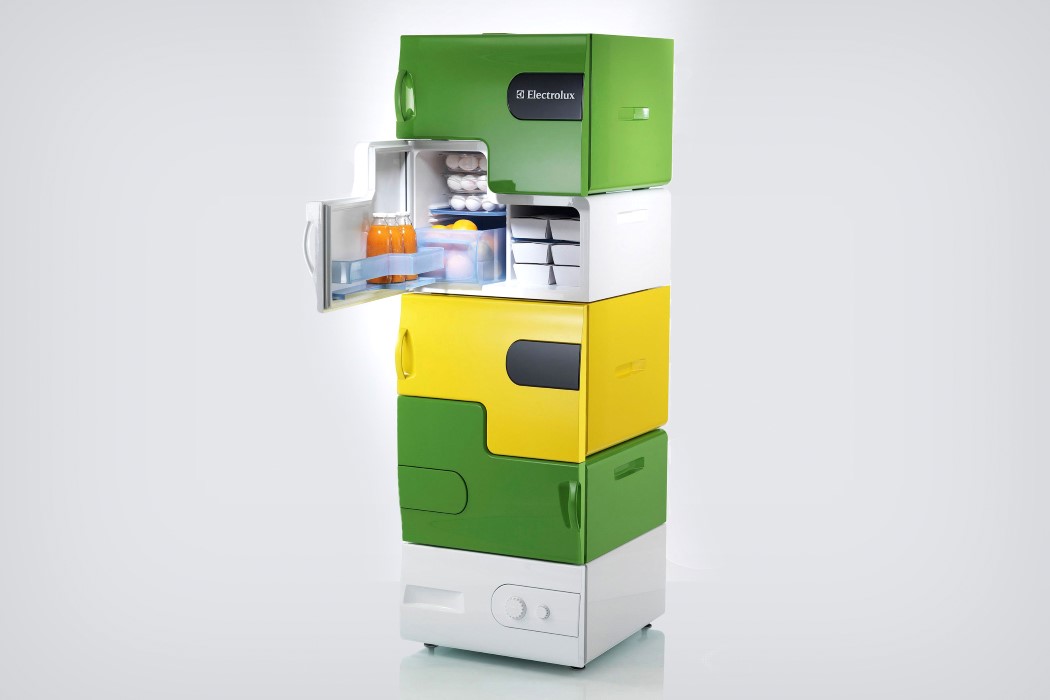
(An Electrolux Design Lab winning concept for a refrigerator made for flat-sharing students with individual compartments).
YD: If nosotros're talking nigh pushing boundaries, let's just get back to Silicon Valley for a second and look at their entire "move fast and break things" mantra. You meet a company like Apple truly innovating, but when they do something like removing the headphone jack from their phones, how do yous view their version of innovation versus Electrolux'due south human being-centric innovation? Do you think this fast-paced, oftentimes consumer-unfriendly innovation is healthy?
SB: I've worked for Nokia for 6 years, and then I know all about Apple coming and disrupting businesses! Hahaha! I recall they tin afford information technology, because they're the leaders and they've got a huge fan-base of operations so probably they'll be pardoned! But and then, you meet how their iPad at present has a USB-C charger, which is the aforementioned charger for my laptop, and quite a few other devices, and at that place's a synergy that Apple'south opting for. Nokia had their ain issues too. In that location were besides many chargers and besides many unlike platforms, and it became a mess. Honestly though, I recall it's interesting that they removed the headset jack, because information technology kick-started a new industry in the truly wireless headphones. In the defense force of man-centric design, maybe that innovation was forced upon the users.
YD: Your thoughts on the latest Mac Pro?
SB: I've simply seen the images, haven't seen i in the stores yet… but yous'll remember me talking about commercial realities. Nosotros'll know how much of a success it is shortly enough! Even though Apple tree doesn't disclose the number of products they've sold anymore, I think we'll get a rough idea whether that design worked or not!
YD: Dorsum to Electrolux! What'due south the stuff you're working on now? I understand Electrolux also owns multiple sub-brands, AEG being one of the more notable ones. How does designing for Electrolux differ from designing for AEG? Is there a distinct difference in the way you approach designing for the two brands inside the same company?
SB: The Intuit Range has to be the most contempo thing we've worked on. Yous may have seen the AEG version of it last year, and we've been working to develop the range under both brands. Both brands have their own directions, heritages, provenances, and fifty-fifty users… so we approach designing products for both brands differently. For instance AEG's Germany-heavy audience focuses more than on power-features, while Electrolux'due south users definitely look for ease-of-use. It'due south a fun challenge designing for both scenarios!
YD: In that location's a lot of talk about sustainability. How does Electrolux view sustainability every bit a goal with its range of products?
SB: Oh, sustainability is definitely a strong theme. It isn't just well-nigh designing a production, information technology's also about helping people live sustainable lives, melt more sustainably, etc. The industry hasn't changed much in the nutrient-world for roughly l-60 years, and the concept of ovens has pretty much been the same. Heat up a cavity and cook meats or pies inside it. So with connectivity, we're too trying to build a sustainable earth. Imagine a fridge that could know what's inside it, and suggest recipes based on the items you lot own and beam those recipes to your oven. Electrolux is always actively working to build products that help people alive better, healthier lives… not simply for them, but besides for the grander scheme of things.
YD: Await, so did this push button come from consumer insights? Or was information technology a design decision?
SB: Oh, it was a CEO determination! Information technology came right from the tiptop! It'southward actually ane of the company'south values, so it was natural that it would be a driver for our visitor. It affects everything we practice. The way we blueprint our products, how we run our factories, deal with suppliers, evangelize goods, fabric choices, everything… and those are honestly the easier $.25. The challenging thing is how to alter consumer behavior. A swell example is our dishwasher, which does abroad with all features and has the most simple UI of a dishwasher, based entirely on one metric. Fourth dimension. All the user does is select the time in which their dishes are washed, and the appliance does the rest. The longer time you select, the more than water-efficient the machine is, and that'southward much more eco-friendly… the UI was designed to promote that and brainwash the user that the longer cycles are more than sustainable for the planet, while the shorter ones focus on cleaning efficiently and fast, frequently using more h2o in the process. Changing materials to more eco-friendly alternatives is actually merely the easier bit. We're also trying to change user behaviors, which is the bigger play, and what's better for the planet.
YD: This was an incredibly insightful conversation Simon! Thanks for taking the fourth dimension out to speak with us, and for designing some truly innovative products! Any concluding remarks?
SB: It is a very fascinating time to be working at Electrolux! For many reasons: Nosotros are celebrating our 100 yr ceremony, we are living in a always changing digital world where the consumer experiences thing! And finally Electrolux is leveraging its Scandinavian heritage, its knowhow in Gustatory modality, Care, Wellbeing and its leadership in sustainability to keep bringing outstanding user experiences to our consumers for another 100 years!
[You lot can check out YD's coverage on Electrolux and AEG'south products by vising this tag]
Source: https://www.yankodesign.com/2019/07/10/electrolux-design-vp-simon-bradford-on-product-design-tech-and-the-impact-of-silicon-valley/
0 Response to "Electrolux Design VP Simon Bradford on product design, tech, and the impact of Silicon Valley - Yanko Design"
Postar um comentário